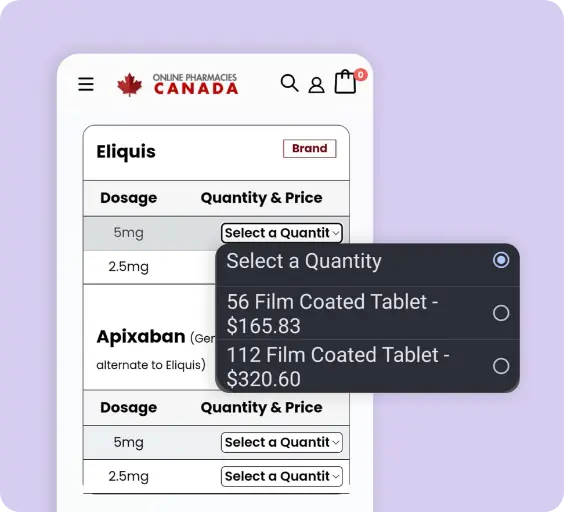
* This price includes a dispensing fee, medical review fee, and packing fee.
Shipped and delivered directly to your doorstep
Femring contains estradiol, a form of estrogen. It is a prescription vaginal ring used to treat certain symptoms of menopause, including hot flashes, night sweats, and changes in the vaginal and vulvar tissues.
Unlike some vaginal estrogen products that mainly act locally, Femring releases estradiol that can be absorbed into the bloodstream and provide systemic estrogen effects throughout the body.
During menopause, the ovaries gradually produce less estrogen.
This drop in estrogen can affect many parts of the body. It can contribute to hot flashes, night sweats, sleep disruption, vaginal dryness, irritation, and thinning of vaginal tissues.
Femring helps replace some of the estrogen that is no longer being produced in the same amount.
Hot flashes are sudden feelings of warmth that may spread across the face, neck, and chest.
They can be accompanied by sweating, flushing, chills, or a rapid heartbeat. Some people experience them several times throughout the day.
Femring helps reduce the hormonal changes that trigger these episodes.
Night sweats are hot flashes that occur during sleep.
They may cause heavy sweating, damp clothing or bedding, and repeated waking during the night. This can lead to poor sleep and daytime tiredness.
By restoring estrogen activity, Femring may help reduce the frequency and severity of these nighttime symptoms.
Lower estrogen levels can cause the tissues of the vulva and vagina to become thinner, drier, and less flexible.
This may lead to symptoms such as dryness, burning, itching, irritation, soreness, or pain during sexual activity.
Femring helps improve the condition of these tissues by providing estradiol.
Estradiol binds to estrogen receptors in the vaginal and vulvar tissues.
This helps support tissue thickness, moisture, elasticity, and blood flow. As the tissues become healthier, dryness and irritation may gradually improve.
Femring belongs to a class of medications called estrogens.
The ring is placed inside the vagina, where it slowly releases estradiol over an extended period. The hormone is absorbed through the vaginal tissues and enters the bloodstream.
Once absorbed, estradiol can act on estrogen receptors throughout the body.
Some vaginal estrogen products are designed mainly to treat vaginal symptoms with very low systemic absorption.
Femring provides a higher level of estradiol absorption and can therefore help treat both vasomotor symptoms, such as hot flashes, and vaginal symptoms.
Because it has systemic effects, many of the same precautions that apply to other forms of systemic estrogen therapy also apply to Femring.
With regular use, Femring may help reduce:
The amount of improvement can vary from person to person.
Femring begins releasing estradiol after it is inserted, but symptom improvement may develop gradually.
Some people may notice changes within the first few weeks, while others may need more time to experience the full benefit.
Femring is designed to remain in place for an extended period before it needs to be replaced.
Your healthcare provider will tell you how long to leave each ring in place and when to insert a new one.
Femring helps manage symptoms caused by low estrogen levels, but it does not reverse menopause.
Symptoms may return after treatment is stopped, so your healthcare provider will periodically review whether you still need estrogen therapy.
Because Femring provides systemic estrogen, your healthcare provider may periodically review your symptoms, medical history, breast health, uterine health, and cardiovascular risk factors.
The goal is generally to use the lowest effective dose for the shortest appropriate length of time while still providing adequate symptom relief.
Femring is a flexible vaginal ring that contains estradiol. It is inserted into the vagina, where it slowly releases estrogen over time.
Each ring is designed to stay in place for 90 days. After that, it should be removed and replaced with a new ring if your healthcare provider wants you to continue treatment.
Before inserting Femring, wash your hands thoroughly with soap and water and dry them well.
Clean hands help reduce the chance of introducing bacteria into the vaginal area.
Take the ring out of its packaging only when you are ready to insert it.
Handle the ring with clean, dry hands.
You can insert Femring in whichever position feels easiest.
You may lie on your back with your knees bent, squat, or stand with one leg raised on a chair or stool. The goal is to relax the muscles around the vaginal opening.
Hold Femring between your thumb and index finger and press the sides together.
You may twist the ring gently into a figure-eight shape if this makes it easier to insert.
Use your other hand to gently separate the skin around the vaginal opening.
Place the folded ring at the entrance of the vagina and use your index finger to guide it inside. Push it upward as far as is comfortable.
Do not force the ring if you feel pain or strong resistance.
When Femring is positioned correctly, you generally should not feel it during normal daily activities.
If you can feel the ring near the vaginal opening or it feels uncomfortable, wash your hands and gently push it farther inside with your finger.
Femring should remain inside the vagina continuously for 90 days.
You do not need to remove it every day. The ring slowly releases estradiol throughout the treatment period.
Femring is designed to stay in place during normal activities such as walking, exercising, bathing, sleeping, and using the bathroom.
If the ring moves lower in the vagina, you can gently push it back into place with a clean finger.
Femring can usually remain in place during sexual intercourse.
If you or your partner notices discomfort, talk to your healthcare provider about the best way to manage it.
If the ring accidentally comes out, follow the instructions provided with your medication for cleaning and reinserting it.
If Femring repeatedly falls out or will not stay in place, contact your healthcare provider.
After 90 days, wash and dry your hands.
Find a comfortable position and insert a finger into the vagina. Hook your finger through or around the ring, then gently pull it downward and outward.
If removal is painful or difficult, do not force it. Contact your healthcare provider for assistance.
After removal, wrap the used Femring in tissue or toilet paper and dispose of it as directed in the medication instructions.
Do not flush the ring down the toilet. Wash your hands again after handling it.
If your healthcare provider wants you to continue treatment, insert a new Femring after removing the old one.
Keeping track of the 90-day replacement date can help prevent the ring from being left in place too long.
Femring provides estrogen that can be absorbed into the bloodstream.
In women who still have a uterus, using estrogen without a progestin may increase the risk of endometrial hyperplasia and endometrial cancer.
Your healthcare provider may recommend additional treatment or monitoring depending on your individual risk factors.
Tell your healthcare provider promptly if you experience unexpected vaginal bleeding or spotting, especially after menopause.
Unusual bleeding should be evaluated because it can sometimes be a sign of changes in the uterine lining.
While using Femring, your healthcare provider may periodically review your symptoms, medical history, and overall response to treatment.
The goal is to use estrogen at the lowest effective dose for the shortest appropriate period while still providing adequate relief from menopausal symptoms.
Femring (Estradiol) is available in the following forms and strength:
Do not start Femring if you have unexplained vaginal bleeding, certain estrogen-sensitive cancers, current or previous blood clots, liver disease, a history of stroke or heart attack, or certain bleeding disorders.
You should also avoid Femring if you are allergic to estradiol or any ingredient in the ring, or if you think you may be pregnant.
Femring should not be used during pregnancy.
If you are breastfeeding, talk to your healthcare provider before using Femring. Estrogen can pass into breast milk and may also affect milk production.
Women who have or have had breast cancer or another estrogen-sensitive cancer should generally not use Femring unless a healthcare provider specifically determines that it is appropriate.
Tell your healthcare provider about any personal or family history of hormone-sensitive cancers before starting treatment.
Femring provides systemic estrogen, which may increase the risk of blood clots, stroke, or heart attack in some women.
The risk may be higher if you smoke or have other cardiovascular risk factors. Seek immediate medical attention if you develop chest pain, sudden shortness of breath, weakness on one side of the body, or difficulty speaking.
Use Femring carefully if you have liver disease or a history of liver problems.
Estrogen can affect liver function, so your healthcare provider may need to monitor you more closely. Contact your healthcare provider if you develop yellowing of the skin or eyes, dark urine, or persistent abdominal pain.
Estrogen therapy may increase the risk of gallbladder problems, including gallstones.
Tell your healthcare provider if you have a history of gallbladder disease or develop severe upper abdominal pain, nausea, or other concerning symptoms during treatment.
Seek medical attention if you develop sudden vision changes or vision loss while using Femring.
Estrogen therapy may also rarely contribute to pancreatitis, especially in people with very high triglyceride levels. Severe upper abdominal pain that may spread to the back should be evaluated promptly.
Femring can interact with certain medications.
Before starting treatment, tell your healthcare provider about all prescription medicines, over-the-counter products, vitamins, supplements, and herbal products you use.
Estrogen can affect the amount of thyroid hormone carried in the blood.
If you take thyroid replacement medication, your healthcare provider may need to monitor your thyroid levels and adjust your dose if necessary.
Femring may cause side effects such as headache, breast tenderness, vaginal bleeding, or spotting.
Tell your healthcare provider if these symptoms become severe, persistent, or uncomfortable.
Using estrogen with a progestin has been associated with an increased risk of probable dementia in women 65 years of age and older.
Hormone therapy should not be used specifically to prevent dementia.
Using estrogen together with a progestin may increase the risk of heart attack, stroke, blood clots, and breast cancer in some women.
Your healthcare provider will consider your individual risk factors before recommending hormone therapy.
You and your healthcare provider should regularly discuss whether you still need Femring.
Hormone therapy is generally used at the lowest effective dose for the shortest appropriate length of time needed to control menopausal symptoms.
No. Femring is not a form of birth control. It is used to treat certain symptoms of menopause, such as hot flashes, night sweats, and vaginal or vulvar changes caused by low estrogen levels.
Femring may take a few weeks to provide noticeable symptom relief. The response can vary from person to person. Your healthcare provider may monitor your symptoms and adjust your treatment if needed.
You should have regular check-ups while using Femring. Your healthcare provider may monitor your overall health, menopausal symptoms, breast health, and any vaginal bleeding. More frequent follow-up may be needed if you have certain medical conditions or risk factors. Report any unusual symptoms, especially unexpected vaginal bleeding, breast changes, severe headaches, chest pain, or leg swelling.
Yes. You can swim, bathe, and shower while using Femring. The ring is designed to remain in place during normal daily activities, so you usually do not need to remove it.
Femring can interact with certain medications. Tell your healthcare provider about all prescription medicines, over-the-counter products, vitamins, supplements, and herbal products you use before starting treatment.
After removing Femring, wrap the used ring in tissue or toilet paper and place it in the household trash. Do not flush Femring down the toilet. Keep used and unused rings out of reach of children and pets.
| Generic name: | Estradiol |
|---|---|
| Formulation: | Vaginal Ring |
| Strength(s): | 0.05mg/24h, 0.1mg/24h |
| Quantities Available: | 1 |
Our online Canadian Pharmacy is known for high standards of quality, safety, and efficiency when it comes to medications.
Our pharmacy offers lower prices on prescription drugs compared to traditional pharmacies.
When ordering Femring (estradiol) from a Canadian pharmacy, you can typically purchase up to a 90-day supply at one time, which is common for prescription medications to ensure adequate management of chronic conditions without frequent refills.
Here’s what you need to know:
Dosage and Quantity: Femring is available in strengths such as 0.05 mg/day or 0.1 mg/day, depending on your prescribed regimen. Each ring is typically inserted into the vagina and replaced every three months. For a 90-day supply, this means you would order 1 ring of the prescribed strength.
No, we do not sell estradiol directly. However, you can still enjoy low prices on Femring, which contains estradiol as an active ingredient. To purchase Femring from our website, you will need a valid prescription from your healthcare provider. We require this to dispense the medication. You can conveniently submit your prescription by mail, fax, or upload it through your online account.
Yes, we ship Femring (estradiol) to both the United States and Puerto Rico.
Online Pharmacies Canada has provided information from third parties intended to increase awareness and does not contain all the information about Femring (Estradiol). Talk to your doctor or other qualified medical practitioners for medical attention or advice, or if you have any concerns about Femring (Estradiol).
REVIEWS