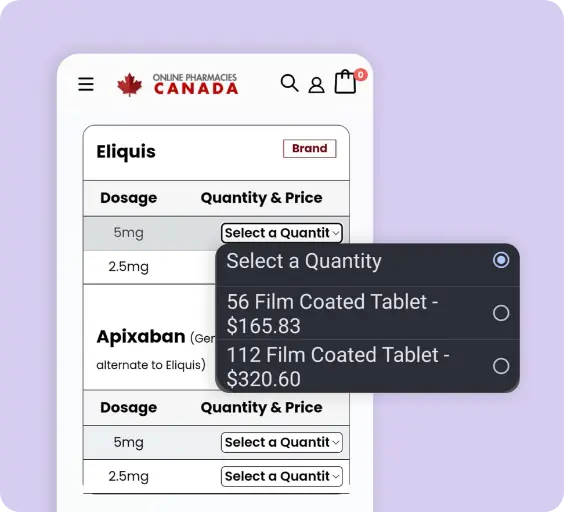
* This price includes a dispensing fee, medical review fee, and packing fee.
Shipped and delivered directly to your doorstep
Norpace (active ingredient: disopyramide) is a prescription medication used to treat certain serious abnormal heart rhythms.
It belongs to a group of medications called Class 1A antiarrhythmics. These medicines affect the electrical signals in the heart and help restore a more regular heartbeat.
Norpace is used to treat life-threatening ventricular arrhythmias, including sustained ventricular tachycardia.
Ventricular arrhythmias begin in the lower chambers of the heart, called the ventricles. When the heart beats too quickly or irregularly, it may not pump blood effectively to the rest of the body.
Symptoms may include:
Because some ventricular arrhythmias can become dangerous, Norpace is generally used under close medical supervision.
Norpace works by changing the way electrical signals travel through the heart.
Disopyramide blocks certain sodium channels in heart muscle cells. This slows the movement of electrical impulses and reduces abnormal electrical activity that can trigger irregular heartbeats.
By slowing electrical conduction and making heart muscle cells less excitable, Norpace can help:
Antiarrhythmic medications can sometimes cause new or worsening rhythm problems, so Norpace usually requires careful monitoring.
Your healthcare provider may check your:
Your dose may be adjusted depending on your heart rhythm, kidney function, side effects, and response to treatment.
Norpace is available as a capsule taken by mouth.
It may be taken with or without food, depending on your healthcare provider’s instructions. Norpace is often taken several times throughout the day to help maintain a steady amount of medication in your body.
The usual adult dosage of Norpace is 400 mg to 800 mg per day, divided into several doses.
For many adults, the recommended total daily dose is 600 mg per day, divided into smaller doses throughout the day.
Your exact dose may depend on factors such as:
Your healthcare provider will determine the dose that is appropriate for you.
Immediate-release Norpace is commonly taken four times a day, or about every 6 hours.
Try to take each dose at approximately the same times every day. Following a regular schedule helps maintain consistent medication levels and can make it easier to remember your doses.
Swallow Norpace capsules whole with water.
Do not crush, chew, or open the capsules unless your healthcare provider specifically tells you to do so.
Take Norpace exactly as prescribed, even if you feel well.
Abnormal heart rhythms may not always cause noticeable symptoms, so it is important to continue treatment unless your healthcare provider tells you to stop.
Do not take more or less than prescribed and do not change how often you take Norpace on your own.
Your healthcare provider may adjust your dose if you have kidney or liver problems, since these conditions can affect how quickly disopyramide is removed from the body.
Older adults may also require closer monitoring or a lower dose.
Do not stop taking Norpace without first talking to your healthcare provider.
Stopping an antiarrhythmic medication without medical guidance may allow your abnormal heart rhythm to return or worsen. Your healthcare provider will tell you how to safely change or stop treatment if necessary.
Norpace (Disopyramide) is available in the following forms and strength:
Norpace is used to treat abnormal heart rhythms, but in some cases it can also cause new or worsening heart rhythm problems.
Because of this risk, Norpace should be used carefully in people with existing heart disease. Your healthcare provider may monitor your heart rhythm with an ECG during treatment.
Norpace can cause QT prolongation, which is a change in the heart’s electrical activity that may lead to a serious or potentially life-threatening abnormal heart rhythm.
The risk may be higher if you already have a prolonged QT interval, have low potassium or magnesium levels, or take other medications that can also prolong the QT interval.
Tell your healthcare provider about all medications you take and any history of heart rhythm problems.
Norpace may cause dizziness, lightheadedness, or blurred vision.
Avoid driving, operating machinery, or performing activities that require clear vision and alertness until you know how the medication affects you.
Norpace can interact with other medications, including some anticholinergic drugs, beta blockers, calcium channel blockers, and medications that affect heart rhythm.
Before starting Norpace, tell your healthcare provider about all prescription medications, over-the-counter medicines, vitamins, and supplements you take.
Disopyramide is partly removed from the body through the kidneys.
If you have kidney disease, the medication may remain in your body longer and increase the risk of side effects. Your healthcare provider may need to lower your dose or monitor you more closely.
Norpace should also be used carefully in people with liver disease.
Liver problems can affect how the medication is processed by the body. Tell your healthcare provider if you have liver disease before starting treatment.
Norpace may lower blood pressure in some people.
This may cause symptoms such as dizziness, weakness, lightheadedness, or fainting. The risk may be more concerning in people with certain heart conditions.
Contact your healthcare provider if you experience frequent dizziness or fainting.
Norpace has anticholinergic effects, which can make it more difficult to empty the bladder.
Tell your healthcare provider if you have difficulty urinating, an enlarged prostate, or another condition that affects urine flow.
Seek medical attention if you become unable to urinate.
Norpace may slow movement through the digestive tract and cause constipation.
Tell your healthcare provider if you already have significant bowel problems or if constipation becomes severe or persistent during treatment.
Older adults may be more sensitive to some of the side effects of Norpace, including:
Closer monitoring or dose adjustments may be needed.
Some people taking Norpace may become more sensitive to sunlight.
Limit prolonged sun exposure and consider using protective clothing and sunscreen when outdoors. Tell your healthcare provider if you develop an unusual or severe skin reaction after sun exposure.
Because Norpace can affect heart rhythm and other body systems, your healthcare provider may monitor your ECG, blood pressure, kidney function, liver function, and electrolyte levels during treatment.
Attend all scheduled follow-up appointments and report any new or worsening symptoms promptly.
If you are pregnant, planning to become pregnant, or breastfeeding, talk to your healthcare provider before taking Norpace. Your healthcare provider will consider the potential benefits of treatment and any possible risks before deciding whether Norpace is appropriate for you. Do not stop taking the medication on your own if you become pregnant during treatment.
Yes. Norpace can generally be taken with or without food. Try to take each dose at the same times every day. Following a regular schedule helps maintain a consistent amount of disopyramide in your body.
Norpace works by changing the way electrical signals travel through the heart. It reduces abnormal electrical activity and helps stabilize the heart’s rhythm. This can help prevent or control certain serious ventricular arrhythmias.
Do not stop taking Norpace without talking to your healthcare provider. Stopping treatment may allow your abnormal heart rhythm to return or become worse. If Norpace needs to be discontinued, your healthcare provider will tell you the safest way to stop treatment.
The half-life of disopyramide is generally about 6 to 7 hours in healthy adults, although it can vary from person to person. A half-life is the amount of time it takes for the level of a medication in the body to decrease by half. Norpace may remain in the body longer in people with kidney or liver problems.
Weight gain is not one of the most common side effects of Norpace. However, unexplained or rapid weight gain can sometimes be a sign of fluid retention or worsening heart problems. Contact your healthcare provider if you notice sudden weight gain, swelling of the legs or ankles, or increasing shortness of breath.
| Generic name: | Disopyramide |
|---|---|
| Formulation: | Capsule |
| Strength(s): | 100mg |
| Quantities Available: | 84 |
Our online Canadian Pharmacy is known for high standards of quality, safety, and efficiency when it comes to medications.
Our pharmacy offers lower prices on prescription drugs compared to traditional pharmacies.
When ordering Norpace (disopyramide) from a Canadian pharmacy, you can typically purchase up to a 90-day supply at one time, which is standard practice for prescription medications to ensure effective management of chronic conditions without frequent refills.
Here’s what you need to know:
Dosage and Quantity: Norpace is usually prescribed in dosage of 100 mg, taken multiple times daily as directed by your healthcare provider. For example, if your prescription is to take 100 mg three times daily, then for a 90-day supply you would order 270 capsules (90 days x 3 capsules per day).
No, we do not sell disopyramide on our website. However, you can still enjoy low prices on Norpace, which contains disopyramide as an active ingredient. To purchase Norpace, you will need a valid prescription from your healthcare provider. We require this prescription to dispense the medication. You can conveniently submit your prescription by mail, fax, or upload it through your online account.
Yes, we ship Norpace (disopyramide) to both the United States and Puerto Rico.
Online Pharmacies Canada has provided information from third parties intended to increase awareness and does not contain all the information about Norpace (Disopyramide). Talk to your doctor or other qualified medical practitioners for medical attention or advice, or if you have any concerns about Norpace (Disopyramide).
REVIEWS