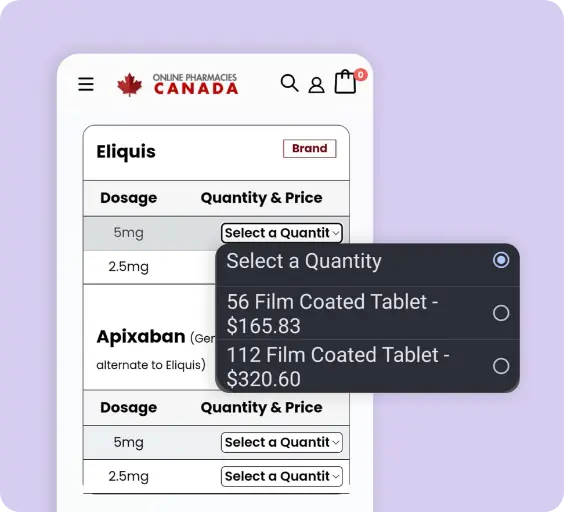
* This price includes a dispensing fee, medical review fee, and packing fee.
Shipped and delivered directly to your doorstep
K-Dur is a prescription potassium supplement that contains potassium chloride. It is used to prevent or treat low levels of potassium in the blood, a condition known as hypokalemia.
Potassium is an essential mineral and electrolyte that plays an important role in many body functions. It helps support normal muscle contractions, nerve signaling, fluid balance, and a steady heartbeat.
K-Dur is generally prescribed when a person does not have enough potassium in the body or is at increased risk of losing too much potassium.
K-Dur is primarily used to treat or prevent hypokalemia.
Low potassium can develop for many reasons. Some people lose potassium because of certain medications, especially diuretics or “water pills.” Others may develop low potassium after prolonged vomiting or diarrhea or because of medical conditions that affect fluid and electrolyte balance.
Your healthcare provider may prescribe K-Dur when potassium levels cannot be adequately maintained through diet alone.
Hypokalemia means that the level of potassium in the blood is lower than normal.
Because potassium is involved in muscle and nerve activity, low levels can affect many parts of the body. Mild hypokalemia may not cause any noticeable symptoms, while more significant potassium loss may lead to weakness, muscle cramps, fatigue, constipation, or abnormal heart rhythms.
Blood tests are usually used to diagnose hypokalemia and determine whether potassium supplementation is necessary.
K-Dur belongs to a group of medications known as electrolyte supplements.
It works by providing potassium chloride, which supplies additional potassium to the body. After the potassium is absorbed, it helps restore potassium levels in the blood and tissues.
Maintaining potassium within a normal range allows the muscles, nerves, heart, and other organs to function properly.
Potassium plays an important role in muscle contraction.
Muscle cells rely on the movement of potassium and other electrolytes to produce the electrical activity needed for normal movement. When potassium levels become too low, muscles may not function properly.
This can result in symptoms such as muscle weakness, cramping, twitching, or fatigue. Severe potassium deficiency can affect larger muscle groups and may cause more serious complications.
Potassium helps nerves transmit electrical signals throughout the body.
These signals allow the brain, spinal cord, and nerves to communicate with the muscles and organs. Maintaining the correct balance of potassium is therefore important for normal sensation, movement, and overall nervous system function.
When potassium levels are significantly abnormal, normal nerve signaling may be disrupted.
The heart depends on a carefully controlled balance of electrolytes, including potassium, to maintain a normal rhythm.
Potassium helps regulate the electrical signals that control each heartbeat. Both very low and very high potassium levels can interfere with this electrical activity and may lead to abnormal heart rhythms.
For this reason, potassium supplements such as K-Dur should be taken exactly as prescribed. Your healthcare provider may order blood tests to make sure your potassium level stays within a safe range.
K-Dur may be prescribed preventively when a person is likely to lose potassium because of another medication or medical condition.
For example, certain diuretics increase the amount of salt and water removed from the body through urine and may also increase potassium loss. In these situations, potassium supplementation may help maintain an appropriate potassium level.
The need for preventive supplementation depends on the individual, so your healthcare provider will determine whether K-Dur is necessary.
If blood tests show that potassium levels are already low, K-Dur can help replace the potassium that has been lost.
The amount of supplementation needed depends on how low the potassium level is, the cause of the deficiency, kidney function, and other medications or medical conditions.
Your healthcare provider may repeat blood tests during treatment to determine whether potassium levels are improving and whether the dose needs to be adjusted.
K-Dur replaces potassium but does not always correct the underlying reason potassium levels became low.
For example, if potassium loss is caused by ongoing vomiting, diarrhea, medication use, or another medical condition, that problem may also need to be treated.
Your healthcare provider may investigate the cause of hypokalemia and recommend additional treatment or changes to your medications when appropriate.
Potassium levels need to stay within a relatively narrow range.
Too little potassium can cause muscle and heart problems, but too much potassium can also be dangerous. Excess potassium, known as hyperkalemia, can interfere with the heart’s normal electrical activity.
For this reason, K-Dur should not be taken in larger amounts or more frequently than prescribed. Your healthcare provider may periodically check your potassium levels, kidney function, and other electrolytes to make sure treatment remains safe and effective.
The length of treatment depends on why potassium supplementation is needed.
Some people may only need K-Dur temporarily while the cause of potassium loss is corrected. Others may need longer-term supplementation if they continue taking a medication or have a condition that causes ongoing potassium loss.
Continue taking K-Dur exactly as prescribed and do not stop or change the dose without discussing it with your healthcare provider.
K-Dur is a prescription potassium supplement that contains potassium chloride. It is mainly used to prevent or treat hypokalemia, which means the potassium level in the blood is lower than normal.
Potassium is essential for normal muscle function, nerve signaling, fluid balance, and heart rhythm. When potassium levels become too low, patients may experience weakness, muscle cramps, fatigue, constipation, or abnormal heart rhythms.
K-Dur may be prescribed when dietary potassium alone is not enough to restore or maintain normal potassium levels.
K-Dur may be used to treat existing hypokalemia caused by conditions or treatments that lead to potassium loss.
This may include prolonged vomiting or diarrhea, certain kidney or hormonal conditions, or the use of medications such as some diuretics, also known as water pills.
The goal of treatment is to restore potassium levels to a normal range and reduce the risk of complications related to potassium deficiency.
K-Dur may also be used to prevent low potassium in people who are at increased risk of developing it.
For example, some patients taking potassium-losing diuretics may require potassium supplementation to keep their levels within a healthy range.
Your healthcare provider will determine whether preventive supplementation is necessary based on blood tests, medications, diet, and overall medical condition.
The dosage of K-Dur is individualized according to the patient’s potassium level and treatment needs.
For adults being treated for hypokalemia, a typical total daily dose of extended-release potassium chloride may range from 40 to 100 mEq per day.
The total dose is usually divided into smaller doses throughout the day. Larger amounts should not generally be taken all at once because this can increase the risk of stomach irritation and excessively high potassium levels.
Your doctor will determine the exact dose based on blood test results and how well you respond to treatment.
For the prevention of low potassium, a common adult dose is approximately 20 mEq per day.
Some patients may require a different amount depending on how much potassium they are losing, their diet, kidney function, and the medications they are taking.
The dose should be adjusted based on laboratory testing rather than changed without medical advice.
There is no single K-Dur dose that is appropriate for everyone.
Your healthcare provider may consider several factors when choosing a dose, including your current blood potassium level, kidney function, heart condition, other electrolyte levels, medications, and the reason for potassium loss.
Blood tests may be repeated during treatment so that the dose can be increased, reduced, or discontinued as needed.
K-Dur should usually be taken with or immediately after a meal and with a full glass of water.
Taking potassium chloride with food and adequate fluid can help reduce irritation of the stomach and digestive tract.
Extended-release tablets should generally be swallowed whole. Do not crush, chew, or suck the tablets because this may interfere with the extended-release design and increase the risk of gastrointestinal irritation.
Follow the instructions provided for your specific potassium chloride product.
Potassium supplementation requires careful monitoring because both low and high potassium levels can be dangerous.
Too little potassium can affect muscles and heart rhythm, while too much potassium can cause hyperkalemia. Severe hyperkalemia can interfere with the heart’s electrical activity and may be life-threatening.
Your healthcare provider may order regular blood tests to monitor potassium levels, kidney function, and other electrolytes while you are taking K-Dur.
The kidneys play a major role in removing excess potassium from the body.
People with reduced kidney function may have difficulty eliminating potassium, which can increase the risk of dangerously high potassium levels. For this reason, K-Dur must be used carefully in patients with kidney problems.
Your doctor may recommend a lower dose, more frequent blood tests, or a different treatment depending on your kidney function.
Oral potassium products such as K-Dur may not be appropriate when potassium levels are extremely low or when rapid potassium replacement is necessary.
In severe cases, potassium may need to be given intravenously under close medical supervision so that potassium levels and heart rhythm can be monitored carefully.
The healthcare provider will determine the appropriate method of replacement based on the severity of the potassium deficiency.
Do not take extra K-Dur because you believe your potassium level is low, and do not increase or decrease your dose without speaking with your healthcare provider.
Potassium requirements can change depending on kidney function, medications, diet, illness, and other factors.
Taking too much potassium can be just as dangerous as having too little, so K-Dur should always be taken exactly as prescribed.
K-Dur (Potassium Chloride) is available in the following forms and strength:
K-Dur can cause hyperkalemia, or too much potassium in the blood. This can be dangerous because high potassium levels can interfere with the electrical activity of the heart.
The risk is greater in people with kidney problems or those taking medications that increase potassium levels. Patients should not take more K-Dur than prescribed, and blood potassium levels may need to be monitored during treatment.
The kidneys remove excess potassium from the body. If kidney function is reduced, potassium can build up in the blood.
Tell your healthcare provider if you have kidney disease or reduced kidney function before taking K-Dur. Your doctor may need to adjust your treatment or monitor your potassium and kidney function more closely.
K-Dur should be taken with meals rather than on an empty stomach.
Potassium chloride can irritate the stomach and gastrointestinal tract. Taking it with food and adequate fluid can help reduce this irritation.
Extended-release potassium chloride tablets can rarely cause serious gastrointestinal problems, including ulcers, narrowing of the digestive tract, obstruction, bleeding, or perforation.
People who have difficulty swallowing or severe gastrointestinal motility problems may need a different potassium formulation. Seek medical attention for severe abdominal pain, persistent vomiting, abdominal swelling, or gastrointestinal bleeding.
Tell your doctor about all prescription medications, over-the-counter drugs, vitamins, and supplements you take.
K-Dur can interact with medications that increase potassium levels. In particular, potassium chloride extended-release products are contraindicated with the potassium-sparing diuretics amiloride and triamterene because of the risk of severe hyperkalemia.
Extra caution may also be required with other medicines that can raise potassium, such as certain blood pressure medications.
Avoid taking additional potassium supplements or potassium-containing salt substitutes unless your healthcare provider recommends them.
Combining several sources of potassium can cause blood potassium levels to become dangerously high.
K-Dur extended-release tablets should be taken according to the instructions for the specific product. They generally should not be crushed, chewed, or sucked because doing so can interfere with the extended-release formulation and increase gastrointestinal irritation.
Your healthcare provider may periodically check your blood potassium level, kidney function, and other electrolytes while you are taking K-Dur.
Monitoring is particularly important if you have kidney disease, heart disease, take medications that affect potassium, or require long-term potassium supplementation.
Contact a healthcare provider promptly if you experience unusual muscle weakness, an irregular heartbeat, severe abdominal pain, persistent vomiting, or signs of gastrointestinal bleeding.
These symptoms may indicate high potassium levels or a serious gastrointestinal reaction and should not be ignored.
Yes. K-Dur should usually be taken with food. Taking potassium chloride with a meal can help reduce stomach irritation, nausea, and other gastrointestinal side effects.
If you miss a dose, take it when you remember unless it is almost time for your next scheduled dose. If your next dose is approaching, skip the missed dose and continue with your regular schedule. Do not take two doses at the same time to make up for a missed dose.
K-Dur begins supplying potassium after it is absorbed, but how quickly blood potassium levels return to normal depends on how low they are and the cause of the deficiency. Your healthcare provider may order blood tests during treatment to determine whether your potassium level is improving.
Do not take additional potassium supplements or potassium-containing salt substitutes unless your healthcare provider recommends them. Taking too much potassium can cause hyperkalemia, which may lead to serious heart rhythm problems.
K-Dur can interact with medications that increase potassium levels in the blood. This may include certain blood pressure medicines, potassium-sparing diuretics, and other medications that affect kidney function or potassium balance. Tell your doctor or pharmacist about all prescription medications, over-the-counter drugs, vitamins, and supplements you take before starting K-Dur.
Yes. Taking too much potassium or having reduced kidney function can cause potassium levels to become dangerously high. Possible symptoms of high potassium may include muscle weakness, numbness or tingling, unusual tiredness, or an irregular heartbeat. Seek medical attention if you develop serious or unusual symptoms while taking K-Dur.
People with kidney problems need to use potassium supplements with extra caution. The kidneys normally remove excess potassium from the body. If kidney function is reduced, potassium can accumulate in the blood and increase the risk of hyperkalemia. Your healthcare provider may monitor your kidney function and potassium levels closely during treatment.
Blood tests help your healthcare provider make sure your potassium level remains within a safe range. Both low and high potassium levels can affect the heart and muscles. Your doctor may also check kidney function and other electrolytes during treatment.
Yes. Common side effects can include nausea, vomiting, diarrhea, gas, and abdominal discomfort. Taking K-Dur with food and enough water may help reduce these effects. Contact your healthcare provider if stomach pain becomes severe or persistent.
Do not stop taking K-Dur without first speaking with your healthcare provider. Low potassium may not always cause noticeable symptoms, so feeling better does not necessarily mean your potassium level has returned to normal. Blood tests may be needed to determine when supplementation can be reduced or stopped.

If you are pregnant, planning to become pregnant, or breastfeeding, tell your healthcare provider before taking K-Dur. Potassium supplementation may sometimes be used when medically necessary, but your doctor should determine the appropriate dose and monitor your potassium levels during treatment.
| Generic name: | Potassium Chloride |
|---|---|
| Formulation: | ER Tablet |
| Strength(s): | 20meq |
| Quantities Available: | 100 |
Our online Canadian Pharmacy is known for high standards of quality, safety, and efficiency when it comes to medications.
Our pharmacy offers lower prices on prescription drugs compared to traditional pharmacies.
When ordering K-Dur (potassium chloride) from a Canadian pharmacy, you can typically purchase up to a 90-day supply at one time, which is common for prescription medications to ensure adequate management of conditions like potassium deficiency without frequent refills.
Here’s what you need to know:
Dosage and Quantity: K-Dur is commonly prescribed in strengths of 20 mEq per tablet, taken multiple times daily depending on the prescribed dose. For example, if prescribed K-Dur 20 mEq three times daily, then for a 90-day supply, you would order approximately 270 tablets (90 days x 3 tablets per day).
Yes, we sell potassium chloride on our website. You can enjoy low prices when you order through us. To purchase potassium chloride, you will need a valid prescription from your healthcare provider, as we require this to dispense the medication safely and appropriately. You have the option to submit your prescription by mailing it to us, faxing it, or uploading it securely through your online account.
Yes, we ship K-Dur (potassium chloride) to both the United States and Puerto Rico.
Online Pharmacies Canada has provided information from third parties intended to increase awareness and does not contain all the information about K-Dur (Potassium Chloride). Talk to your doctor or other qualified medical practitioners for medical attention or advice, or if you have any concerns about K-Dur (Potassium Chloride).
REVIEWS